
When visiting Bali, you may notice small, beautifully arranged offerings placed in front of homes, at temple entrances, on shop counters, and along pathways. These traditional offerings, known as Canang Sari, are an important part of daily Balinese Hindu life.
Made from woven coconut or palm leaves and decorated with colorful flowers, Canang Sari represents gratitude, devotion, and the desire to maintain harmony between people, nature, and the spiritual world.
Although these offerings may appear simple, they carry deep cultural and religious meaning. Each element reflects a tradition that continues to shape everyday life across Bali.
For travelers who want to understand the island beyond its landscapes and tourist attractions, learning about Canang Sari offers a meaningful introduction to Bali’s living culture.
Quick Answer: What Is Canang Sari in Bali?
Canang Sari is a traditional Balinese Hindu offering made from woven palm leaves, flowers, and other symbolic materials. Commonly prepared and presented each day, it expresses gratitude and devotion to Ida Sang Hyang Widhi Wasa, the Supreme God in Balinese Hindu belief. The offering also reflects the importance of spiritual harmony, respect for nature, and sincerity in daily life.
Key Takeaways
- Canang Sari is a daily expression of gratitude. It represents devotion and respect within Balinese Hindu religious practice.
- Its flowers carry symbolic meanings. Traditional colors are associated with different directions and divine manifestations.
- Natural materials form the offering. Woven leaves, flowers, and other symbolic elements are arranged with care.
- The tradition remains part of everyday life. Offerings can be found at homes, temples, businesses, and sacred places.
- Visitors can learn through cultural experiences. Guided Canang Sari-making activities provide insight into Balinese traditions, including experiences available at Puri Gangga Resort in Sebatu.
What Is Canang Sari?
Canang Sari is a traditional offering prepared by Balinese Hindus as an expression of gratitude and devotion to Ida Sang Hyang Widhi Wasa.
The term sari is commonly understood as essence, while interpretations of canang are connected with traditional offering practices and the meaningful arrangement of their elements.
Together, Canang Sari represents an offering prepared with sincerity, devotion, and respect.
These offerings are commonly placed at family shrines, household temples, entrances, and other designated locations. Their preparation connects everyday responsibilities with religious observance.
For many Balinese families, making Canang Sari is not simply a decorative craft. It is a meaningful spiritual practice passed down through generations.
What Is the Meaning of Canang Sari in Balinese Hinduism?
The meaning of Canang Sari centers on gratitude, devotion, and the importance of maintaining harmony.
Within Balinese Hinduism, daily offerings provide an opportunity to acknowledge life’s blessings and express respect for the divine.
This understanding connects with Tri Hita Karana, a Balinese philosophy emphasizing three harmonious relationships:
- Parahyangan: Harmony between humans and the divine.
- Pawongan: Harmony among people.
- Palemahan: Harmony between humans and the natural environment.
Canang Sari reflects these values through its spiritual purpose, natural materials, and role in family and community life.
Preparing an offering also encourages patience, discipline, and sincerity. Each carefully arranged flower and woven leaf contributes to an act of devotion.
For visitors, understanding this meaning reveals why Canang Sari remains important in Bali’s daily cultural and religious life.
What Do the Flowers in Canang Sari Represent?
One of the most recognizable features of Canang Sari is its arrangement of colorful flowers.
In traditional Balinese Hindu symbolism, flower colors can represent different divine manifestations and cardinal directions.
A commonly recognized arrangement includes:
- White flowers — East: Associated with Dewa Iswara and purity.
- Red flowers — South: Associated with Dewa Brahma.
- Yellow flowers — West: Associated with Dewa Mahadewa.
- Dark-colored flowers — North: Associated with Dewa Wisnu. Blue, green, or purple flowers may be used when dark flowers are unavailable.
The center may contain mixed flowers or fragrant shredded pandan leaves, depending on the offering tradition.
These associations reflect traditional religious symbolism. However, arrangements and materials may vary according to local customs, family practices, and ritual purposes.
The deeper significance lies not only in the colors but also in the intention behind preparing the offering.
What Are the Main Components of Canang Sari?
Although individual arrangements vary, Canang Sari commonly contains several natural and symbolic materials.
1. Woven Palm-Leaf Container
The base is traditionally made from young coconut or palm leaves, folded and woven into a small tray.
This container holds the flowers and other offering elements. Creating it requires care, practice, and attention to detail.
2. Colorful Flowers
Fresh flowers form the most recognizable part of Canang Sari.
Their colors and placement may follow traditional symbolic arrangements associated with divine manifestations and directions.
3. Porosan
An important traditional component is porosan, commonly prepared using betel leaf, areca nut, and lime.
Porosan is associated with the Hindu Trimurti: Brahma, Wisnu, and Siwa.
Its inclusion adds religious significance beyond the offering’s decorative appearance.
4. Fragrant Pandan Leaves
Finely sliced pandan leaves, sometimes called bunga rampai or kembang rampe, may be included for their fragrance and symbolic role.
These natural elements contribute to the traditional composition of the offering.
5. Additional Offering Materials
Depending on local customs and the purpose of the offering, Canang Sari may include rice, small food items, or other symbolic materials.
Incense is also commonly used when the offering is presented during prayer.
The exact composition may differ, but the preparation should always reflect sincerity and respect.
When and Where Do Balinese People Place Canang Sari?
Canang Sari is commonly prepared and presented each day, often during the morning.
However, the timing may vary according to family routines, religious observances, and local traditions.
Visitors can encounter these offerings in several locations:
- At family shrines and household temples.
- Near the entrances of homes and residential compounds.
- At shops, restaurants, and other businesses.
- Within temple courtyards and sacred areas.
- At designated places along pathways and streets.
Some offerings rest on raised shrines, while others are placed closer to the ground.
Their locations reflect religious practices rather than decorative preferences.
When walking through Bali, visitors should remain mindful of offerings and avoid disturbing them.
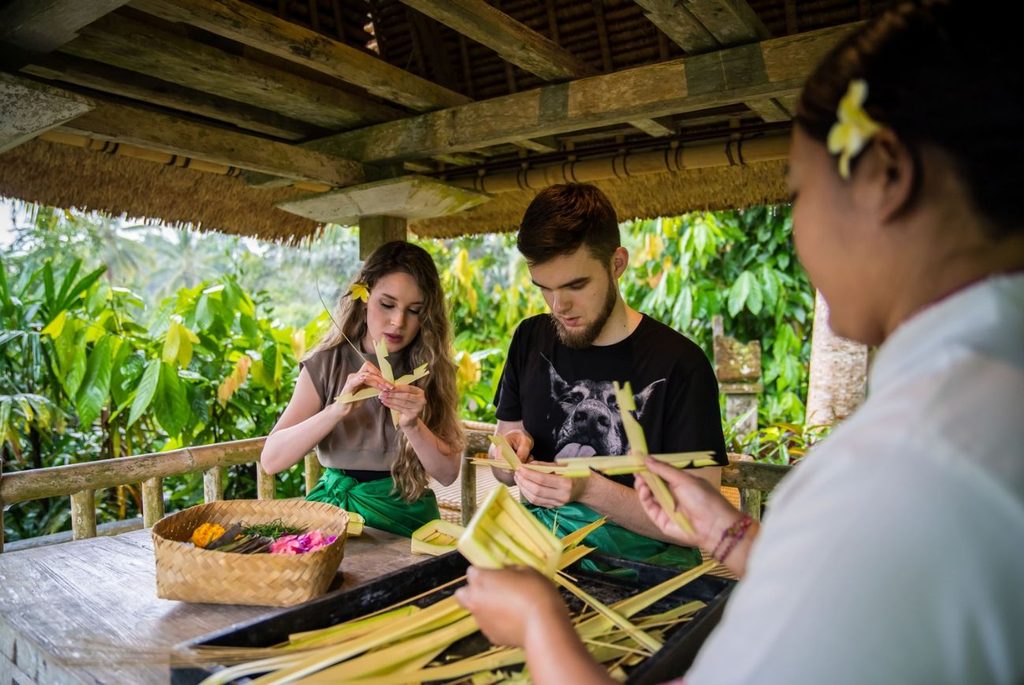
How Is Canang Sari Made?
Making Canang Sari combines traditional craftsmanship with spiritual intention.
The process involves preparing natural materials, weaving the leaf container, arranging flowers, and assembling the offering according to the appropriate customs.
Step 1: Prepare the Materials
Fresh flowers, young coconut leaves, and other required materials are collected before preparation begins.
The selection depends on the offering’s purpose and the traditions followed by the person preparing it.
Step 2: Weave the Container
Young palm leaves are folded and secured to create a small tray.
The weaving technique may vary between families and communities.
Step 3: Arrange the Flowers
Flowers are placed carefully inside the container.
Traditional arrangements may follow symbolic colors and directions, although local variations exist.
Step 4: Add the Remaining Elements
Other materials, including porosan and fragrant leaves, are incorporated according to the relevant offering tradition.
Step 5: Prepare the Offering for Prayer
Once completed, Canang Sari is ready to be presented in the appropriate location.
The act of offering may include prayer, incense, and other customary elements.
For Balinese Hindu families, the completed offering represents more than the materials used to create it. Its spiritual significance comes from the devotion and sincerity behind the practice.
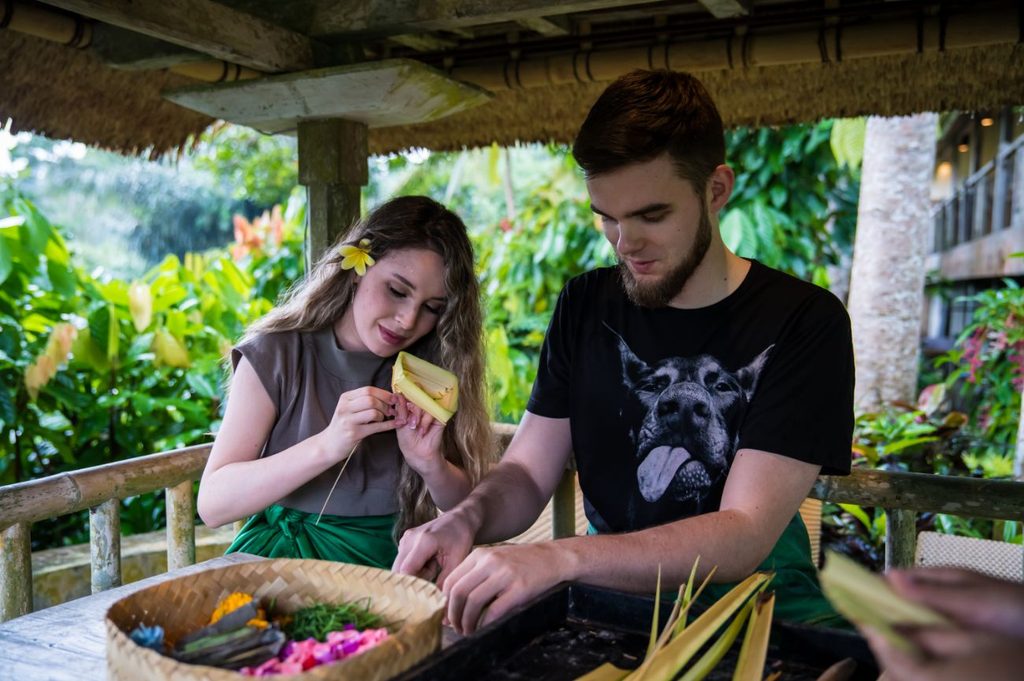
Can Tourists Learn to Make Canang Sari in Bali?
Yes. Visitors can learn about Canang Sari through cultural workshops and guided experiences led by local hosts.
These activities introduce participants to traditional weaving techniques, flower arrangements, and the cultural meaning behind daily offerings.
Rather than simply observing a finished Canang Sari, travelers can experience the patience and craftsmanship involved in preparing one.
A knowledgeable local host can also explain appropriate etiquette and the importance of treating the offering respectfully.
At Puri Gangga Resort in Sebatu, guests can discover Balinese cultural traditions through experiences connected to the surrounding village community.
The resort’s Sebatu Village Life Package includes a Canang Sari-making experience, providing an opportunity to learn about this meaningful tradition during a stay.
For couples, families, and culturally curious travelers, such experiences offer a deeper understanding of Bali beyond its famous attractions.
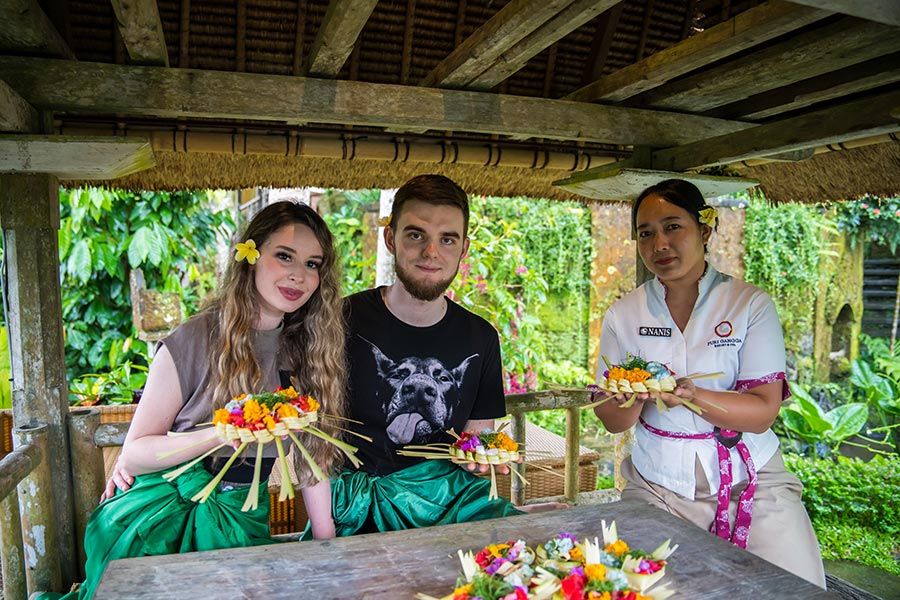
Experience the Tradition of Canang Sari in Sebatu Village
Located in the Tegallalang area of Gianyar, Sebatu Village offers a peaceful setting where visitors can discover traditional Balinese community life.
Surrounded by tropical greenery and natural landscapes, the village provides opportunities to explore local customs, craftsmanship, and spiritual traditions.
At Puri Gangga Resort, cultural experiences introduce guests to aspects of Balinese life that continue to shape the surrounding community.
Learning to make Canang Sari provides a particularly meaningful connection to these traditions.
Participants can discover how everyday natural materials become religious offerings while gaining an appreciation for the values of gratitude, patience, and devotion.
The experience also encourages respectful cultural exchange between visitors and local hosts.
Travelers interested in exploring more of the region can discover additional traditional Balinese activities and cultural experiences, including local cooking traditions and other activities offered by the resort.
For those planning a stay in Sebatu, contacting the resort in advance is recommended to confirm current activity schedules and arrangements.
Canang Sari Etiquette: What Should Visitors Know?
Canang Sari is a religious offering, so visitors should approach it with respect.
Understanding a few simple customs can help travelers appreciate the tradition without disturbing religious practices.
Avoid Stepping on Offerings
Be mindful when walking near doorways, shrines, and pathways.
If you notice Canang Sari on the ground, walk around it whenever possible. Never intentionally step on, kick, or damage an offering.
Do Not Move Offerings for Photographs
An offering’s placement may have religious significance.
Avoid moving or rearranging Canang Sari to create a better photograph.
Ask Permission Before Photographing People
When someone is preparing an offering or participating in prayer, ask permission before taking close-up photographs.
Respect their privacy and religious activities.
Dress Appropriately at Temples
Visitors entering Balinese Hindu temples should follow local dress requirements.
A sarong and sash may be required, along with other rules specific to the temple.
Follow Local Guidance During Cultural Activities
If you participate in a Canang Sari-making experience, listen carefully to your local host.
Learning the craft is an opportunity to appreciate the tradition, not to treat a sacred offering merely as a souvenir.
Respectful participation helps preserve the meaning of the experience.
Frequently Asked Questions About Canang Sari
What is Canang Sari in Bali?
Canang Sari is a traditional Balinese Hindu offering commonly prepared from woven palm leaves, flowers, and symbolic materials. It expresses gratitude, devotion, and respect for the divine.
Why do Balinese people make Canang Sari every day?
Daily offerings are part of Balinese Hindu religious practice. They provide a way to express gratitude, maintain spiritual awareness, and acknowledge the importance of harmony in everyday life.
What do the flowers in Canang Sari mean?
Flower colors are traditionally associated with different divine manifestations and cardinal directions. White is commonly associated with the east, red with the south, yellow with the west, and dark colors with the north. Local customs and arrangements may vary.
What is Canang Sari made from?
Canang Sari commonly includes a woven palm-leaf container, colorful flowers, porosan, fragrant leaves, and other symbolic materials depending on the offering tradition.
Can tourists make Canang Sari in Bali?
Yes. Visitors can participate in cultural workshops guided by local hosts. These experiences introduce the preparation process and explain the religious and cultural significance of the offering.
Is Canang Sari the same as other Balinese temple offerings?
Canang Sari is one type of offering within Balinese Hindu practice. Other offerings, such as Gebogan, may differ in size, materials, arrangement, and ceremonial purpose.
Where can visitors learn about Canang Sari in Bali?
Visitors can discover Canang Sari-making experiences at cultural venues and selected resorts. Puri Gangga Resort in Sebatu includes this activity within its Sebatu Village Life Package. Contact the resort to confirm current availability and arrangements.
Discover the Living Culture of Bali at Puri Gangga Resort
Canang Sari offers a meaningful glimpse into the values that shape everyday life in Bali.
Each woven leaf, carefully arranged flower, and prepared offering reflects a tradition rooted in gratitude, devotion, and respect.
For travelers visiting Sebatu, learning about Canang Sari creates an opportunity to connect with local culture beyond sightseeing.
At Puri Gangga Resort, guests can discover this tradition through hands-on cultural experiences while enjoying the peaceful surroundings of the village.
After exploring Balinese traditions, visitors can continue their stay with relaxing treatments at Dewi Gangga Spa, dining at Kailasha Restaurant, or discovering the natural beauty of Sebatu and the surrounding Ubud region.
Whether you are visiting Bali for the first time or returning to explore its cultural heritage more deeply, learning about Canang Sari can bring a greater appreciation of the island’s living traditions.
Discover Canang Sari, explore Sebatu Village, and experience the living culture of Bali at Puri Gangga Resort.
For cultural activity arrangements and accommodation inquiries, contact reservation@puriganggaresort.com.
Explore the Sebatu Village Life Package or book your stay at Puri Gangga Resort.