Purification at Sebatu Holy Water: A Complete Guide to the Authentic Balinese Melukat Ritual
Hidden among the lush landscapes of North Ubud, Sebatu Holy Water offers something increasingly difficult to find in Bali today—an authentic spiritual experience that remains deeply connected to local traditions rather than tourism. While many travelers know Tirta Empul as Bali’s most famous purification temple, fewer discover the quiet sanctuary of Sebatu, where generations of Balinese families continue to perform Melukat, a sacred purification ritual that symbolizes cleansing not only the body, but also the mind and spirit.
For the Balinese Hindu community, holy water—or tirta—is much more than water flowing from a natural spring. It represents divine blessings, balance, and harmony between humans, nature, and the spiritual world. Participating in a purification ceremony is therefore not simply an activity during a holiday. It is an opportunity to respectfully experience one of Bali’s oldest living traditions while gaining a deeper understanding of the island’s unique philosophy of life.
Located only a few minutes from Puri Gangga Resort, Sebatu Holy Water remains one of the island’s hidden spiritual treasures. Unlike larger temples that often welcome hundreds of visitors each day, Sebatu provides a quieter atmosphere where guests can experience the ceremony with greater peace and personal reflection.
This guide explains everything you need to know before visiting Sebatu Holy Water, including the history of the site, the meaning of Melukat, the ceremony process, cultural etiquette, and practical travel tips to help you participate respectfully.
What Is Melukat?
More Than a Cleansing Ritual
Melukat is a traditional Balinese Hindu purification ceremony intended to cleanse negative energy from both the body and the soul. The word “Melukat” comes from ancient Balinese language and refers to the process of spiritual purification through holy water.
For Balinese people, life is a continuous journey of maintaining balance. Daily challenges, emotional burdens, illness, grief, or important life transitions are believed to affect one’s spiritual harmony. Melukat is performed to restore this balance by asking for blessings from Ida Sang Hyang Widhi Wasa (God) through sacred water.
Although many international visitors describe Melukat as a “spiritual cleansing,” local people rarely think of it as something mystical. Instead, it is a humble act of gratitude, reflection, and prayer that has been passed down through generations.
The Philosophy Behind Holy Water
Water occupies a sacred place within Balinese Hinduism.
Known as Tirta, holy water symbolizes purity, life, healing, and divine energy. Almost every important religious ceremony in Bali involves Tirta, whether it is a temple festival, wedding, family ceremony, or daily offering.
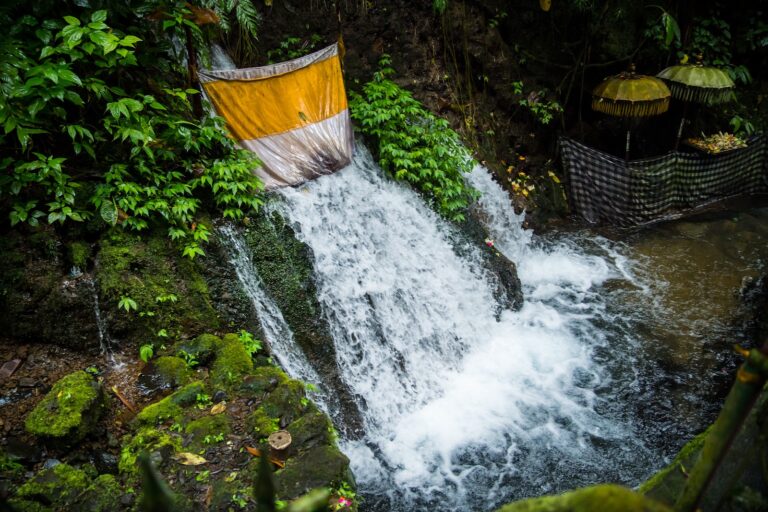
Unlike ordinary water, Tirta has first been blessed through prayer before being used in rituals. Natural springs such as those found in Sebatu are believed to possess exceptional spiritual significance because they emerge naturally from the earth and have supported surrounding communities for centuries.
For many local residents, these springs are not tourist attractions. They are sacred places that continue to provide water for ceremonies, agriculture, and everyday religious life.
Why Visitors Join Melukat
People choose to participate in Melukat for many different reasons.
Some seek inner peace after a stressful period.
Others wish to mark an important milestone such as a birthday, marriage, career change, or personal transformation.
Many simply wish to experience Balinese culture in a meaningful way.
Regardless of personal beliefs, the ceremony welcomes visitors who approach it with genuine respect and an open mind.
The purpose is not to change one’s religion but to experience an important part of Balinese culture while appreciating its spiritual values.
Why Choose Sebatu Holy Water?
A Hidden Sanctuary Near Ubud
While Bali offers several purification sites, Sebatu Holy Water remains one of the island’s quieter locations.
Surrounded by tropical forest, rice terraces, and traditional villages, the atmosphere feels calm from the moment visitors arrive.
Instead of large tour groups, you are more likely to meet local families quietly performing prayers before entering the holy spring.
This slower pace allows visitors to experience the ceremony without feeling rushed.
A Living Spiritual Tradition
One of Sebatu’s greatest strengths is that it remains an active place of worship.
Residents from nearby villages regularly visit the spring before important ceremonies, family celebrations, or temple festivals.
Children often accompany their parents, learning traditions that have been preserved for generations.
This creates an authentic environment where visitors witness Balinese culture as it naturally exists rather than as a performance designed for tourism.
A Local Perspective
For many people living in Sebatu, Melukat is not considered a special event.
It is simply part of life.
Someone preparing for a wedding may visit the holy spring.
A farmer may pray before planting rice.
A family might perform Melukat together before Galungan or Kuningan.
Young people often come before starting a new chapter in their lives.
This everyday relationship with the holy spring is what makes Sebatu unique.
Visitors are not entering a museum or cultural show—they are respectfully stepping into a living tradition that continues to shape the rhythm of village life.
Understanding this perspective helps transform the experience from sightseeing into genuine cultural appreciation.
The History of Sebatu Holy Water
A Village Shaped by Sacred Springs
The name Sebatu itself has long been associated with natural springs that nourish both the surrounding landscape and the spiritual life of the community.
For centuries, these waters have supported agriculture through Bali’s famous Subak irrigation system while also serving as important sources of holy water for religious ceremonies.
Like many sacred places across Bali, the exact origins of Sebatu Holy Water are preserved through local oral traditions rather than written historical records.
What remains unchanged, however, is the community’s deep respect for the spring as a gift that sustains life physically and spiritually.
Water, Nature, and Spiritual Balance
Balinese philosophy teaches that humans should live in harmony with three interconnected relationships:
- Harmony with God
- Harmony with fellow human beings
- Harmony with nature
This philosophy, known as Tri Hita Karana, explains why natural springs are carefully protected.
The water is not only important because people drink it.
It represents the continuous relationship between nature, spirituality, and community.
Every purification ceremony therefore becomes an expression of gratitude for this balance.
Why Sebatu Still Matters Today
As tourism has grown throughout Bali, some sacred places have become increasingly crowded.
Sebatu has managed to retain much of its peaceful atmosphere.
Visitors still hear birds instead of traffic.
They still encounter local people carrying offerings.
Temple ceremonies continue according to the Balinese calendar rather than the tourism calendar.
This authenticity is one of Sebatu’s greatest strengths.
Rather than feeling separated from local culture, visitors become respectful observers of traditions that continue to flourish in everyday life.
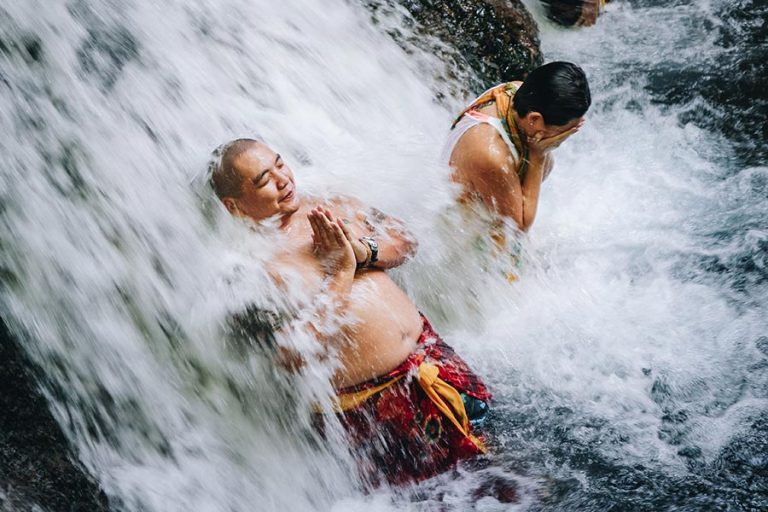
Understanding the Balinese Purification Ceremony
For many first-time visitors, participating in a Melukat ceremony can feel unfamiliar. However, the ritual is not complicated. Rather than focusing on strict rules, the ceremony encourages participants to approach the experience with humility, respect, and gratitude.
Although each temple may have slight differences, the overall process remains similar throughout Bali.
Preparing Your Mind
Before entering the holy spring, take a few moments to slow down.
Unlike many tourist activities, Melukat is not about checking another destination off your itinerary. Local people often arrive quietly, offering prayers before entering the water. Some reflect on personal challenges, while others simply express gratitude for good health and family.
You do not need to follow a particular religion to appreciate this moment. Simply entering with sincerity and respect is considered the most important preparation.
Wearing Traditional Temple Attire
Visitors are expected to wear appropriate temple clothing.
This usually includes:
- A sarong
- A sash tied around the waist
- A modest top covering the shoulders
Many purification sites provide sarongs for visitors, although bringing your own is always appreciated.
Temple attire represents respect for the sacred space rather than a dress code imposed on visitors.
Preparing the Offering
Before entering the spring, participants usually prepare a small offering known as Canang Sari or Pejati.
These beautiful handwoven palm-leaf offerings contain flowers, incense, and symbolic elements representing gratitude toward God.
Visitors unfamiliar with Balinese traditions do not need to prepare offerings themselves. Local guides or temple attendants are generally happy to assist.
Receiving guidance from local people often becomes one of the most memorable parts of the experience.
Receiving the Blessing
Depending on the temple and ceremony, a local priest or temple guardian may offer prayers before participants enter the water.
Holy water may be sprinkled over the head while prayers are recited.
This blessing symbolizes spiritual readiness before the purification begins.
Entering the Holy Water
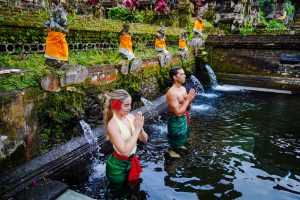
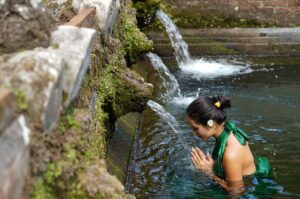
Participants then move slowly through the series of water fountains.
At each fountain, people pause briefly to pray before allowing the water to flow over their head.
Rather than rushing through every fountain, many Balinese take time to reflect quietly at each stage.
Visitors are encouraged to follow the guidance provided by local attendants, as certain fountains may be reserved for specific ceremonies.
A Moment of Reflection
After completing the purification, many people choose to sit quietly for several minutes.
Unlike many travel experiences that end with taking photographs, Melukat often concludes with silence.
This moment allows participants to appreciate the peaceful surroundings while reflecting on the experience.
For many visitors, this quiet reflection becomes the most meaningful part of the ceremony.
What Should You Wear?
Dressing appropriately demonstrates respect for Balinese culture and helps preserve the sacred atmosphere of the temple.
Recommended clothing includes:
- Sarong
- Temple sash
- Modest shirt covering the shoulders
- Comfortable sandals
- Dry clothes for changing afterwards
Avoid wearing revealing clothing, swimsuits, or clothing with offensive graphics.
Remember that you are visiting an active place of worship rather than a recreational swimming area.
What Should You Bring?
Preparing a few simple items will make your visit more comfortable.
Recommended items include:
- A towel
- Dry clothes
- Waterproof bag
- Drinking water
- Small cash donation if appropriate
- Camera (used respectfully)
Most importantly, bring an open mind.
The ceremony is less about photography and more about experiencing Balinese culture with genuine appreciation.
Can Foreign Visitors Participate?
Yes.
Visitors from all backgrounds are welcome to participate in Melukat, provided they respect local customs.
Balinese people generally appreciate guests who sincerely wish to learn about their culture.
Participation is not considered religious conversion.
Instead, it is viewed as joining a cultural and spiritual tradition respectfully.
However, visitors should remember that they are guests within an active religious community.
Simple gestures—such as speaking quietly, dressing appropriately, and following local guidance—are greatly appreciated.
Best Time to Visit Sebatu Holy Water
Sebatu can be visited throughout the year.
However, certain times provide a more peaceful experience.
Early Morning
Morning visits offer cooler temperatures, softer light, and a quieter atmosphere before larger groups arrive.
For guests staying at Puri Gangga Resort, reaching Sebatu early is both convenient and highly recommended.
Weekdays
Weekdays are generally less crowded than weekends or public holidays.
This creates a more relaxed environment for personal reflection.
Temple Ceremony Days
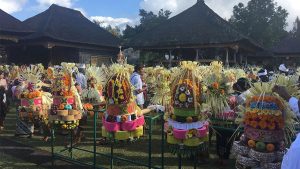
Occasionally, local temple ceremonies take place.
While these events can be beautiful to witness, visitors should always follow instructions from temple authorities and avoid interrupting religious activities.
The Benefits of Experiencing Melukat
People leave the ceremony with different impressions.
Some describe feeling lighter.
Others speak about emotional clarity.
Many simply appreciate having slowed down in a world that often moves too quickly.
Whether viewed spiritually, culturally, or personally, Melukat encourages visitors to pause and reconnect—with themselves, with nature, and with the traditions that continue to shape Balinese life.
Perhaps its greatest value lies not in seeking extraordinary experiences, but in rediscovering the importance of gratitude, humility, and balance.
Staying Near Sebatu Holy Water
One advantage of staying in Sebatu is the opportunity to experience the ceremony without rushing.
Guests at Puri Gangga Resort can reach Sebatu Holy Water within just a few minutes, allowing them to visit early in the morning when the atmosphere is especially peaceful.
The resort’s location also makes it easy to combine the purification ceremony with other cultural experiences, including village walks, rice field explorations, yoga sessions, and traditional Balinese wellness treatments.
Rather than treating Melukat as a standalone activity, many guests choose to make it part of a slower journey of reflection during their stay in North Ubud.
Experiencing Bali in this way often creates memories that last far beyond the holiday itself.
Discover the Spiritual Heart of Sebatu
Bali is often celebrated for its beaches, waterfalls, and iconic temples, yet its true essence is found in the traditions that continue to shape everyday life. At Sebatu Holy Water, visitors are invited to experience one of these living traditions—not as spectators, but as respectful guests welcomed into a community where faith, nature, and culture remain deeply connected.
Whether you are seeking a moment of reflection, a deeper understanding of Balinese culture, or simply a peaceful experience away from the crowds, Melukat offers an opportunity to slow down and reconnect with what truly matters.
Located just minutes from Puri Gangga Resort, Sebatu Holy Water provides a meaningful beginning to a journey through North Ubud—one where wellness is measured not only by relaxation, but also by the sense of balance and gratitude you carry home.
Contact Us for More
- Contact: reservation@puriganggaresort.com
- Booking: https://puriganggaresort.com/book
- Experiences: https://booking.puriganggaresort.com
Discover More Stories