Ubud Art Market Guide: What to Buy, Opening Hours & Local Shopping Tips
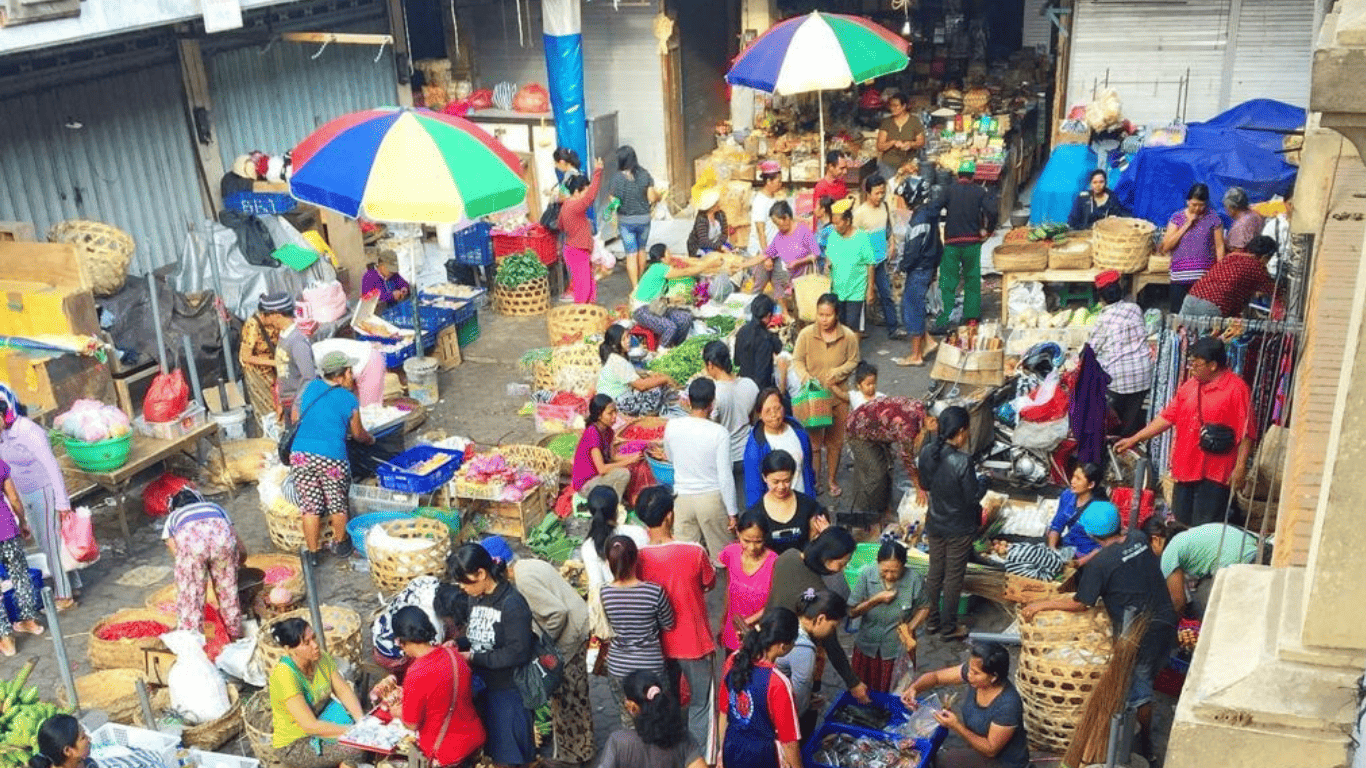
Ubud Art Market, locally known as Pasar Seni Ubud, is a popular place to visit in central Ubud for travellers looking for Balinese handicrafts, woven bags, textiles, paintings, jewellery, clothing, and souvenirs.
Located directly opposite Ubud Royal Palace, the market is easy to include in a day of exploring Ubud’s cultural centre. You can browse the stalls in the morning, visit the palace and nearby temples, enjoy lunch in central Ubud, and continue exploring the surrounding area.
For first-time visitors, however, it helps to know what to buy, when to visit, how bargaining works, and which attractions can be combined with the market.
This guide covers the essential information you need to plan a visit to Ubud Art Market in Bali, including its location, opening hours, entrance fee, what to buy, shopping tips, nearby attractions, and how to visit from Sebatu.
Ubud Art Market at a Glance
Information | Details |
|---|---|
Local name | Pasar Seni Ubud |
Location | Jalan Raya Ubud, Ubud, Gianyar, Bali |
Landmark | Directly opposite Ubud Royal Palace |
Entrance fee | Generally free |
Opening hours | Mainly daytime; individual vendors may vary |
Best time to visit | Morning to early afternoon |
Recommended duration | 1–2 hours |
Known for | Handicrafts, woven bags, textiles, paintings, jewellery, clothing and souvenirs |
Payment | Indonesian Rupiah is recommended |
Bargaining | Common at many market stalls |
Nearby attractions | Ubud Royal Palace, Pura Taman Saraswati and central Ubud |
What Is Ubud Art Market?
Ubud Art Market is a traditional market in the heart of Ubud where visitors can browse a variety of Balinese-inspired crafts, artwork, clothing, accessories, and souvenirs.
Known locally as Pasar Seni Ubud, the market is particularly convenient for travellers because of its central location opposite Ubud Royal Palace.
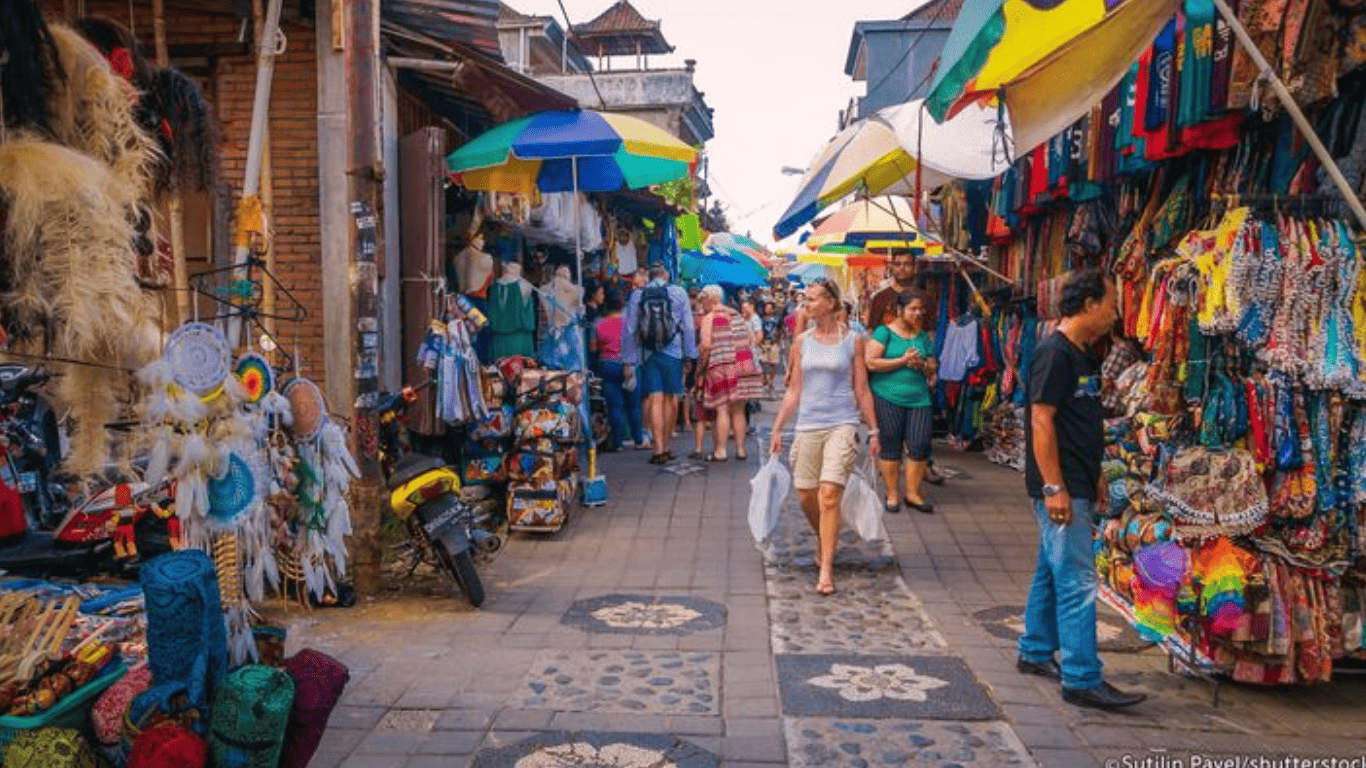
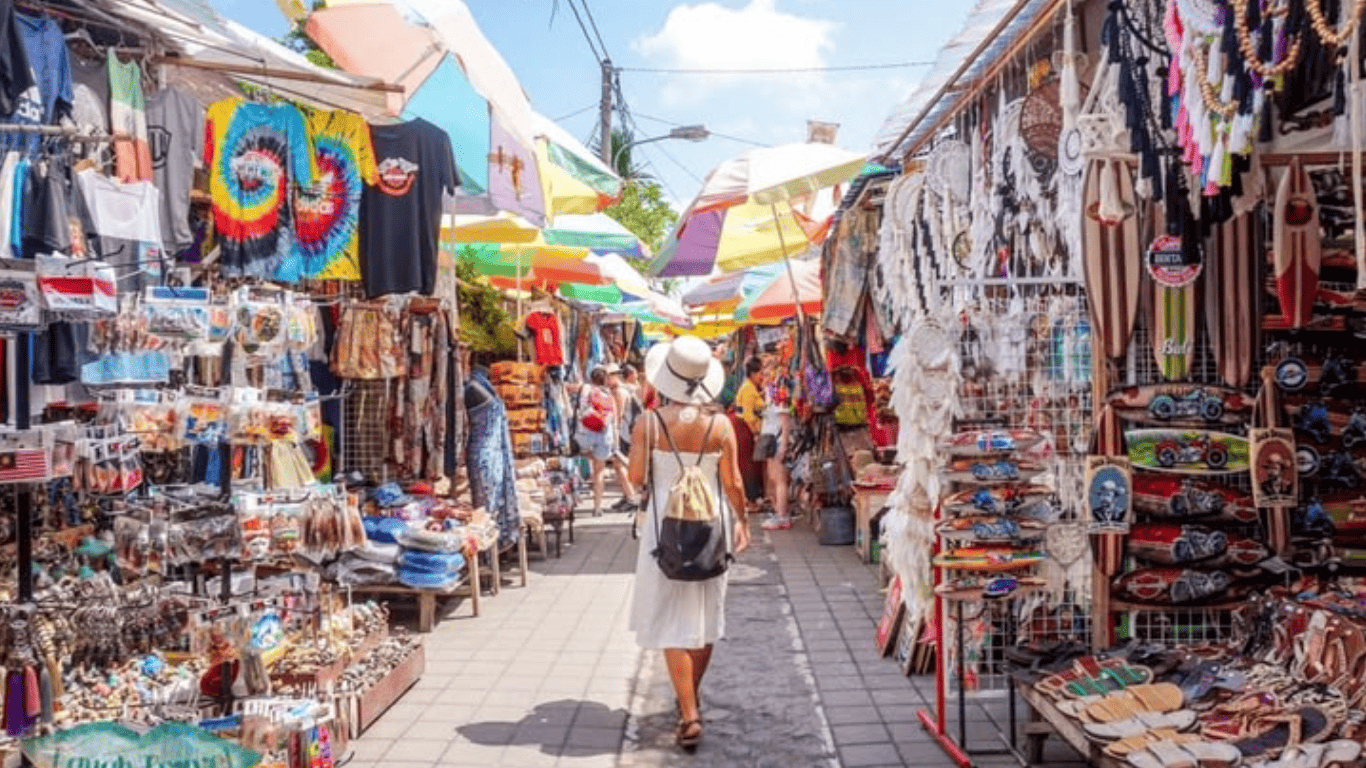
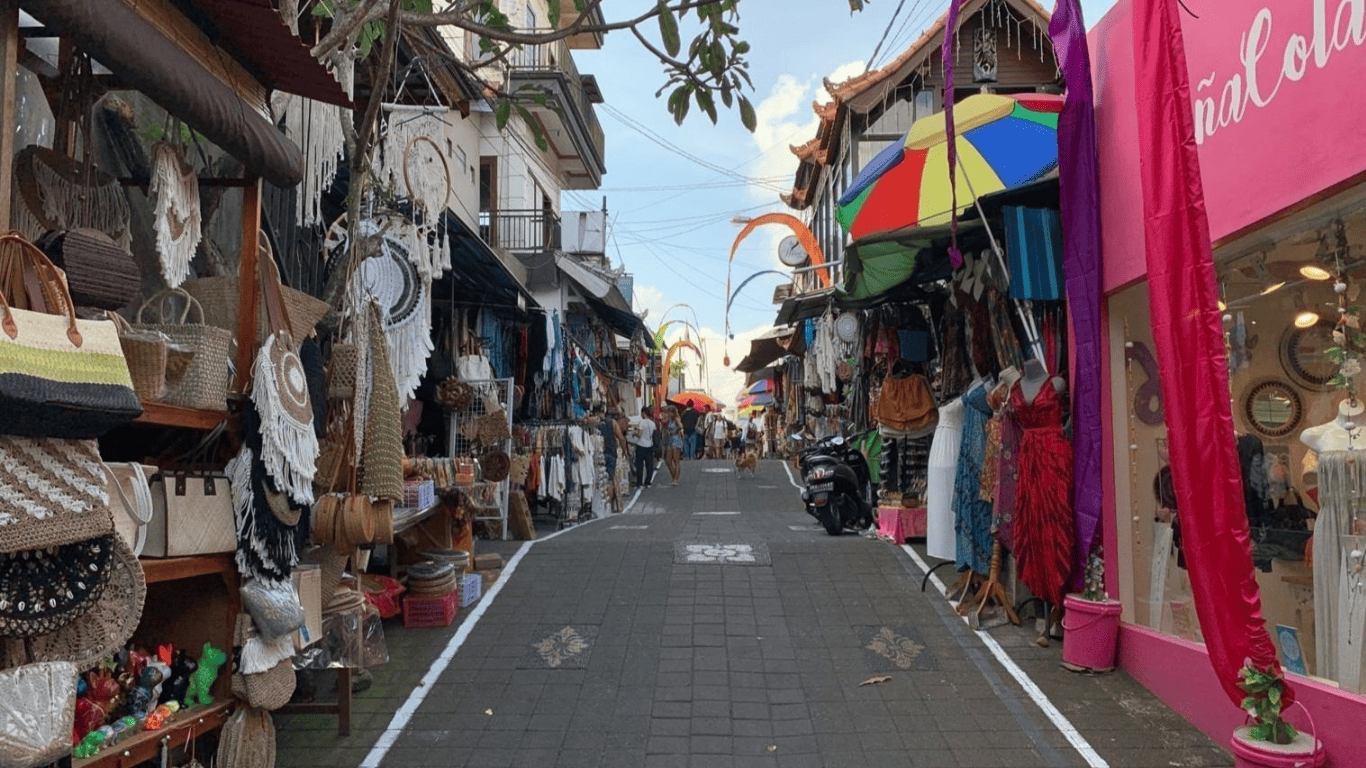
As you walk through the market, you can find colourful textiles, woven products, paintings, wood carvings, jewellery, clothing, decorative items, and gifts.
Popular items include:
- Woven and rattan bags
- Sarongs and textiles
- Scarves
- Paintings
- Wood carvings
- Jewellery
- Clothing
- Hats and baskets
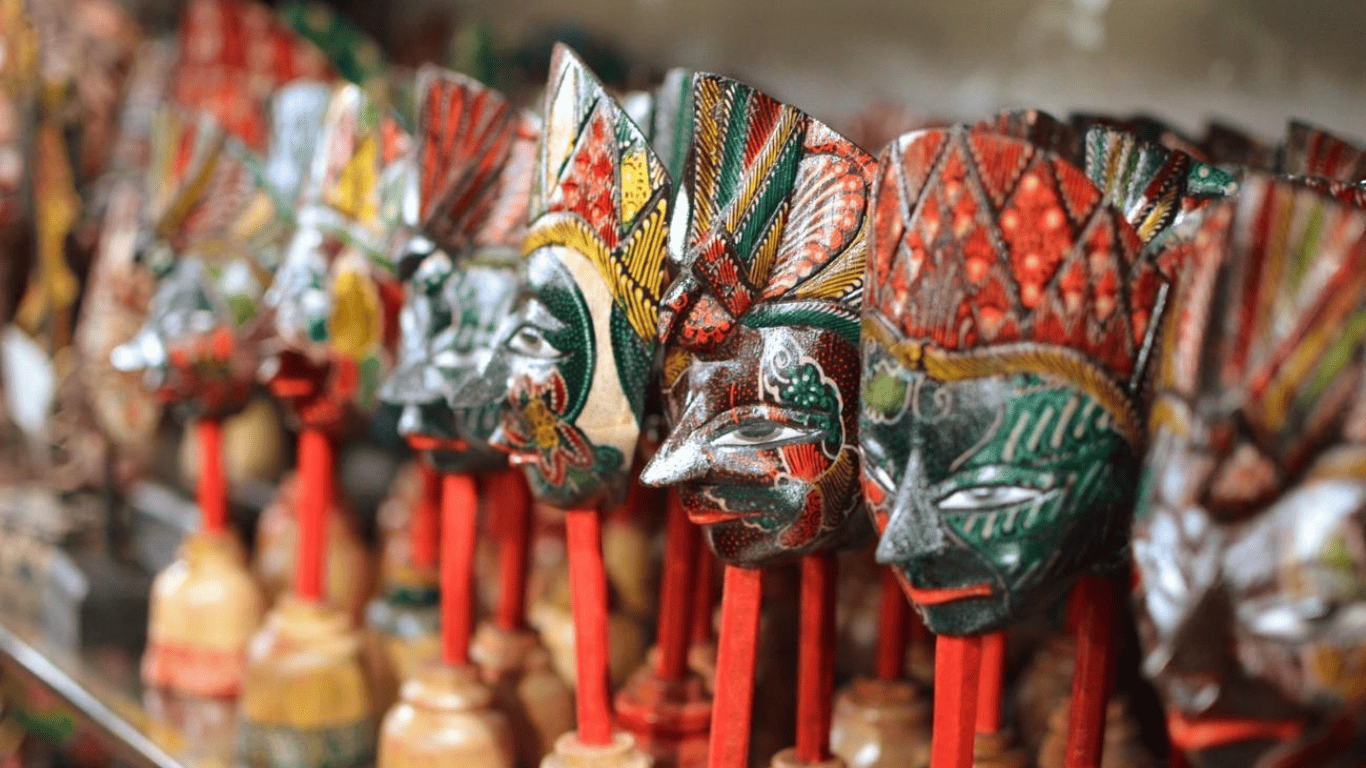
- Decorative masks
- Small statues
- Home décor
- Bali-inspired souvenirs
The selection varies between vendors, so taking time to walk around and compare products is part of the shopping experience.
For travellers interested in Balinese arts and crafts, the market also provides an accessible introduction to some of the materials, patterns, and decorative styles commonly associated with Bali.
Where Is Ubud Art Market?
Ubud Art Market is located on Jalan Raya Ubud in central Ubud, directly opposite Ubud Royal Palace.
Its central location makes it easy to combine with several other attractions.
After visiting the market, you can continue to:
Ubud Royal Palace
Pura Taman Saraswati
Central Ubud
Art galleries
Cafés and restaurants
Local shops and boutiques
Ubud Art Market Address
Jalan Raya Ubud No. 35, Ubud, Gianyar, Bali 80571, Indonesia.
If you are travelling with a private driver, you can ask to be dropped at Ubud Art Market, opposite Ubud Palace.
How to Get to Ubud Art Market
There are several convenient ways to reach the market.
From Central Ubud
If you are staying in central Ubud, the market is within walking distance from many hotels, restaurants, and attractions.
By Private Driver
A private driver is convenient if you want to combine the market with several attractions in one day.
You could visit Ubud Art Market together with Ubud Palace, Pura Taman Saraswati, Tegallalang, Sebatu, or other cultural attractions.
From Sebatu
Travellers staying in Sebatu can include Ubud Art Market as part of a day trip to central Ubud.
For guests staying at Puri Gangga Resort, the resort’s scheduled Ubud shuttle can also make visiting central Ubud more convenient, subject to the current daily schedule.
Because the market is located close to Ubud Palace, it can be an easy starting point for exploring the cultural centre of Ubud.
Ubud Art Market Entrance Fee
There is generally no entrance fee to visit Ubud Art Market.
Visitors can enter and browse the market freely.
Your main expenses will be the items you choose to purchase, along with transportation or parking costs if applicable.
If you plan to shop, carrying some Indonesian Rupiah in smaller denominations is recommended. Cash is particularly useful when buying smaller souvenirs from traditional market stalls.
Ubud Art Market Opening Hours
One of the most common questions from travellers is:
What time does Ubud Art Market open?
The main art-market area operates during the daytime, although individual vendors may have different opening and closing times.
Published travel information generally places the main shopping period from the morning through late afternoon.
For travellers primarily interested in handicrafts and souvenirs, visiting between morning and afternoon is a practical choice.
What is the best time to visit Ubud Art Market?
Morning is a good time to visit.
It can be more comfortable for walking and gives you plenty of time to continue to nearby attractions afterwards.
If shopping is your main purpose, allow around one to two hours to browse without rushing.
What to Buy at Ubud Art Market
Wondering what to buy at Ubud Art Market?
The answer depends on whether you are looking for something practical, decorative, lightweight, or specifically connected with Balinese craftsmanship.
Here are some of the most popular categories to explore.
Woven and Rattan Bags
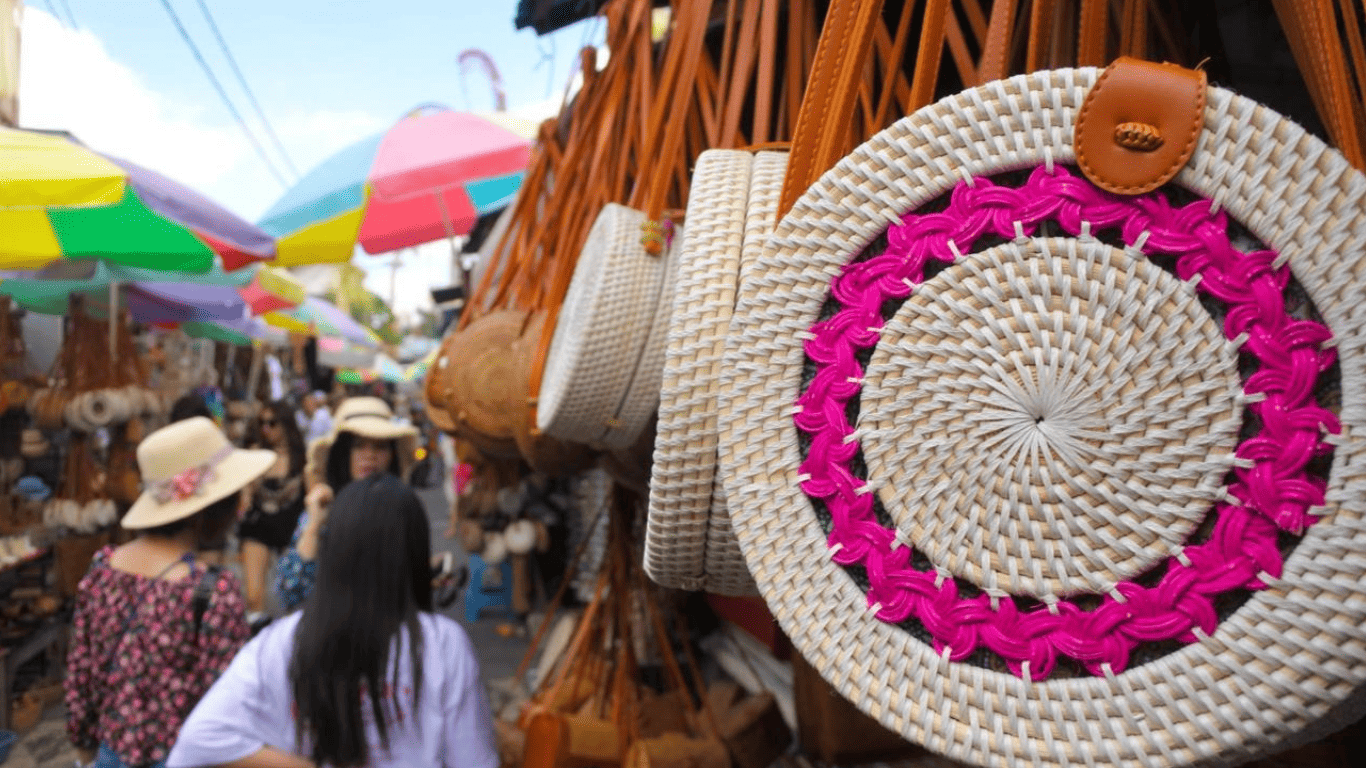
Woven bags are among the most recognisable Bali souvenirs.
You can find different shapes and sizes, from small handbags to larger beach-style bags.
Before buying, check the quality of the weaving, handles, stitching, and finishing.
A woven bag is also a practical souvenir because you can use it during your holiday and after returning home.
Sarongs and Textiles
Sarongs and textiles are another classic Bali purchase.
You may find different colours, patterns, materials, and designs.
A sarong can also be useful when visiting temples in Bali, where appropriate clothing is important.
If you are interested in textiles, compare the fabric and finishing of several pieces before making your choice.
Paintings
Painting has a strong association with Ubud’s artistic identity.
At the market, you may find paintings depicting:
Rice fields
Balinese villages
Nature
Traditional life
Cultural scenes
Abstract designs
Take your time when choosing artwork and select something that genuinely appeals to you.
Wood Carvings
Wooden decorative pieces can make distinctive Bali souvenirs.
Depending on the stall, you may find small carvings featuring animals, nature, figures, decorative motifs, and other designs.
If you are considering a larger piece, remember to consider luggage and transportation requirements.
Jewellery
Jewellery is an easy souvenir to pack and can make a thoughtful gift.
Depending on the vendor, you may find rings, bracelets, earrings, necklaces, and Balinese-inspired designs.
If a product is described as silver or another precious material, ask the seller about the material before purchasing.
Clothing and Accessories
T-shirts, scarves, casual clothing, hats, and other accessories are also commonly available.
These can be useful if you are looking for smaller gifts for friends and family.
Home Décor
For something to display at home, look for smaller decorative pieces such as woven baskets, wooden ornaments, masks, statues, and other Bali-inspired decorations.
For international travellers, smaller pieces are often easier to pack and transport.
How to Bargain at Ubud Art Market
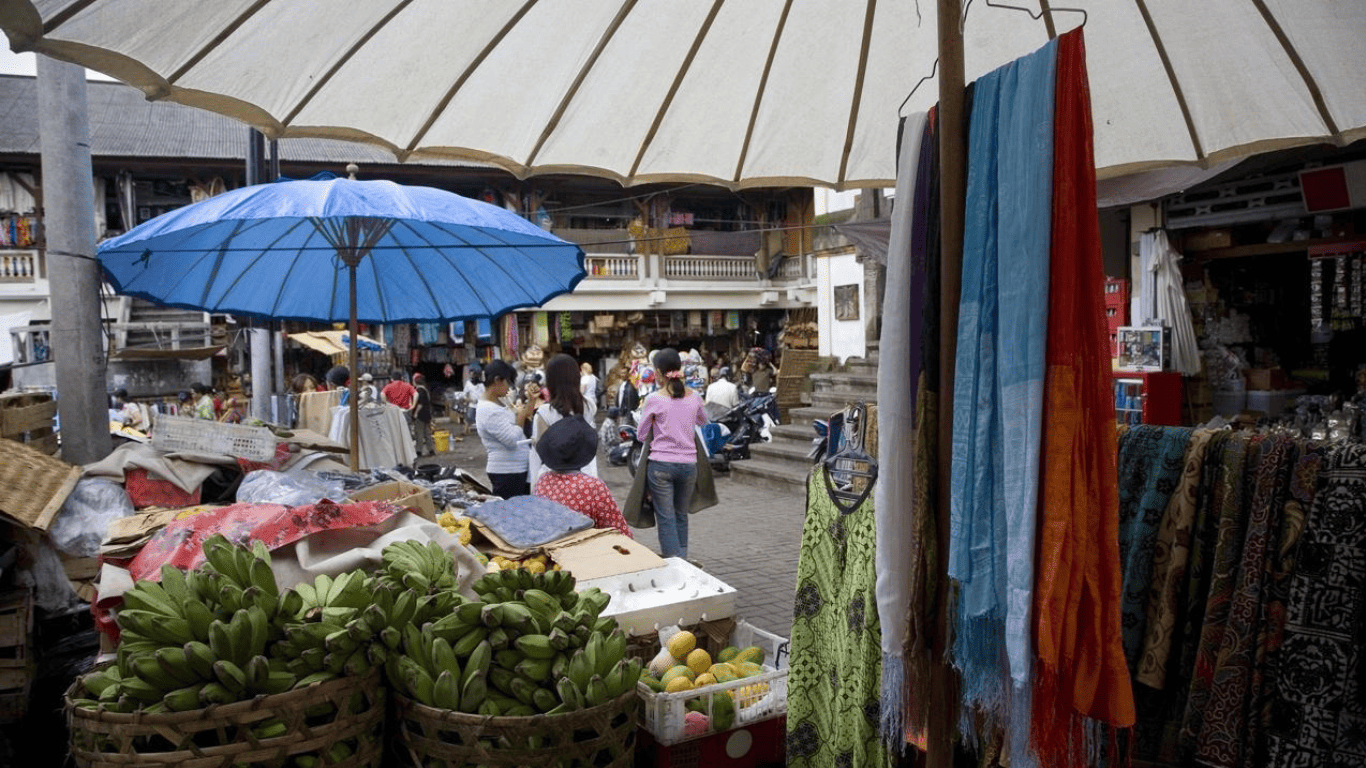
Bargaining is part of the shopping experience at many traditional markets in Bali.
At Ubud Art Market, the process is best approached in a friendly and relaxed way.
A simple approach to bargaining:
Ask the price first.
Let the seller give you the initial price.
Look at the product carefully.
Consider its quality, material, size, and finishing.
Make a reasonable offer.
You can negotiate from there.
Keep it friendly.
Bargaining does not have to be stressful.
Know when to stop.
If you cannot agree on a price, simply thank the seller and continue looking.
Useful Indonesian phrases
“Berapa harganya?”
How much is it?
“Bisa kurang?”
Can you make it cheaper?
“Saya lihat-lihat dulu.”
I will look around first.
“Terima kasih.”
Thank you.
Even using a few simple Indonesian phrases can make your shopping experience more enjoyable.
Shopping Tips for Ubud Art Market
A little preparation can make your visit easier.
Bring Indonesian Rupiah
Small denominations are useful for purchasing inexpensive souvenirs.
Compare before buying
If you find something you like, walk around first. Similar products may be available at different stalls.
Check the quality
Look carefully at stitching, materials, handles, surfaces, and finishing details.
Bring a reusable shopping bag
This is useful if you plan to purchase several items.
Wear comfortable shoes
You may spend quite a bit of time walking and standing while browsing.
Keep your belongings secure
As with other busy tourist areas, keep personal belongings close to you while exploring.
Cultural Etiquette When Shopping in Bali
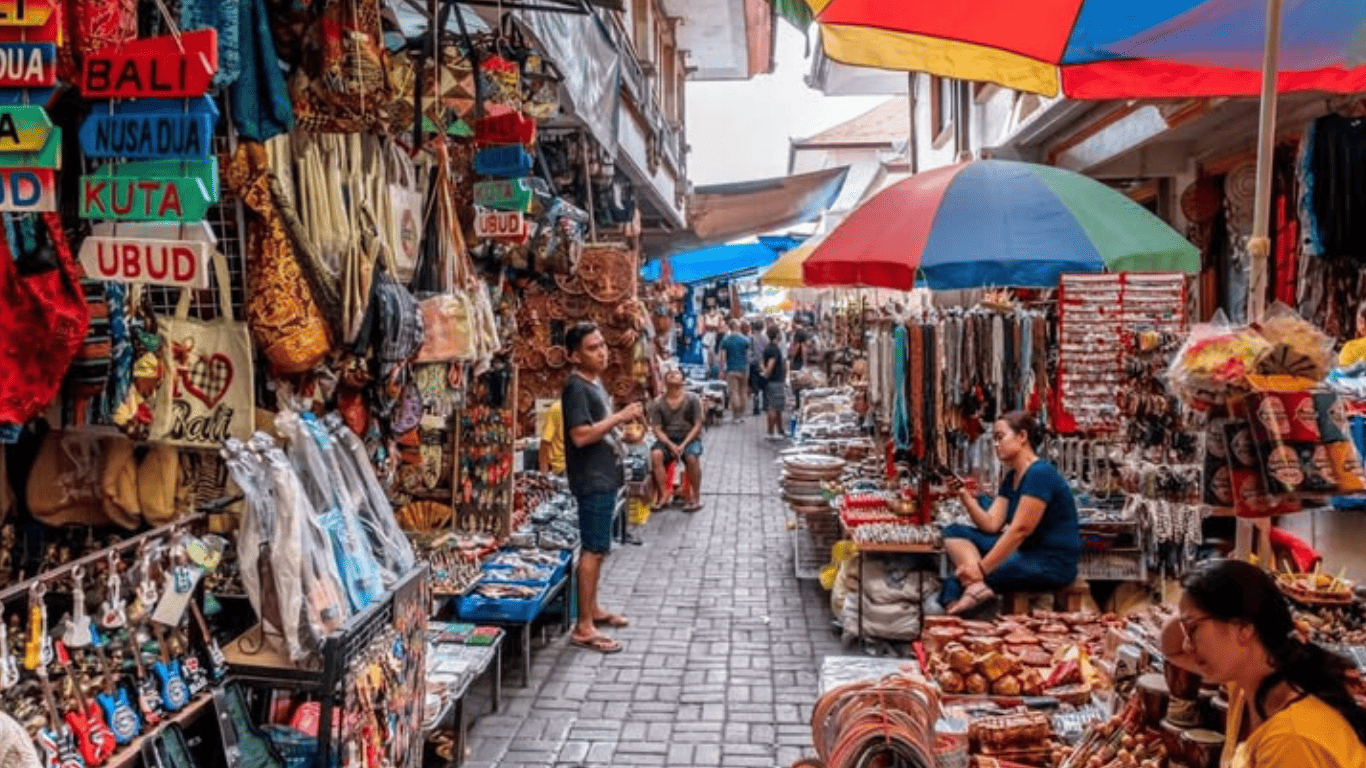
A traditional market is also part of local daily life, so a little cultural awareness goes a long way.
When visiting Ubud Art Market:
- Be polite when asking about prices.
- Bargain respectfully.
- Avoid handling delicate products unnecessarily.
- Ask before photographing vendors or personal belongings.
- Treat religious objects and offerings with respect.
- Avoid stepping over offerings.
- Be patient when the market is busy.
The experience becomes more enjoyable when shopping is approached as an opportunity to interact respectfully with local people and discover a different side of Ubud.
How Long Should You Spend at Ubud Art Market?
For most visitors, one to two hours is enough to explore the market comfortably.
If you already know what you want to buy, you may need less time.
If you enjoy looking through textiles, artwork, bags, jewellery, and decorative items, you may want to stay longer.
Because the market is in central Ubud, it is best combined with other attractions rather than treated as a full-day destination.
Example itinerary
9:00 AM – Ubud Art Market
10:30 AM – Ubud Royal Palace
11:00 AM – Pura Taman Saraswati
12:00 PM – Lunch in central Ubud
Afternoon – Continue exploring Ubud
Things to Do Near Ubud Art Market
Ubud Royal Palace
Located directly opposite the market, Ubud Royal Palace is one of the easiest attractions to visit before or after shopping.
The palace is an important cultural landmark in central Ubud and can be included naturally in your itinerary.
Pura Taman Saraswati
Pura Taman Saraswati is known for its Balinese architecture and lotus pond.
The temple is within walking distance of Ubud Art Market, making it an easy addition to a central Ubud cultural walk.
Central Ubud
After visiting the market, take time to explore the surrounding streets.
You will find cafés, restaurants, galleries, boutiques, and other cultural attractions within the central Ubud area.
Ubud Art Market vs Sukawati Market
Travellers often ask whether they should visit Ubud Art Market or Sukawati Market.
Both markets offer opportunities to shop for local products, but they can suit different itineraries.
Ubud Art Market
Ubud Art Market is particularly convenient for visitors exploring central Ubud.
It is suitable for those looking for:
Souvenirs
Woven bags
Textiles
Paintings
Jewellery
Clothing
Decorative items
Its location opposite Ubud Palace makes it easy to combine shopping with sightseeing.
Sukawati Market
Sukawati is another traditional market in Gianyar and can be included if your itinerary takes you towards other areas of the regency.
If your day is focused on central Ubud, Ubud Art Market is a convenient choice because it is already close to several major cultural attractions.
Frequently Asked Questions
Is Ubud Art Market worth visiting?
Ubud Art Market is a convenient place to browse and shop for Balinese-inspired souvenirs, handicrafts, textiles, artwork, bags, jewellery, and clothing.
Its central location also makes it easy to combine with Ubud Royal Palace and other nearby attractions.
What is Ubud Art Market famous for?
The market is known for handicrafts and souvenirs such as woven bags, textiles, sarongs, paintings, wood carvings, jewellery, clothing, and decorative items.
Is Ubud Art Market free?
Yes. There is generally no entrance fee to enter the market. You pay for the products you purchase and any applicable transportation or parking costs.
What time does Ubud Art Market open?
The main art-market area operates during the daytime, although individual vendors may have different schedules. Morning through afternoon is a practical time to plan your visit.
What is the best time to visit Ubud Art Market?
Morning is a good time to visit because the weather is generally more comfortable for walking and you have plenty of time to continue exploring Ubud afterwards.
Can I bargain at Ubud Art Market?
Yes. Bargaining is common at many market stalls. Keep the negotiation friendly and respectful.
What should I buy at Ubud Art Market?
Popular choices include woven bags, sarongs, textiles, scarves, paintings, wood carvings, jewellery, clothing, and small decorative items.
How long do I need at Ubud Art Market?
Around one to two hours is enough for most visitors to browse the market comfortably.
Is Ubud Art Market near Ubud Palace?
Yes. Ubud Art Market is located directly opposite Ubud Royal Palace.
Can I visit Ubud Art Market from Sebatu?
Yes. Ubud Art Market can easily be included in a day trip from Sebatu. Guests staying at Puri Gangga Resort can also use the resort’s scheduled transportation service to Ubud Centre, subject to the current daily schedule.
Experience Puri Gangga Resort
For those drawn to culture and creativity, the experience of Ubud deepens when it extends beyond the market.
At Puri Gangga Resort in Sebatu, Ubud, cultural immersion unfolds naturally. Through the Sebatu Village Life experience, guests gain insight into traditional crafts, rituals, and daily rhythms that shape the very items found in Ubud Art Market.
Moments of calm are found at Dewi Gangga Spa, where treatments reconnect body and mind. Dining at Kailasha Restaurant reflects Bali’s culinary heritage with refined simplicity, while Gangga Coffee offers a closer connection to local agriculture.
For a more curated exploration, the Gangga Experience introduces travelers to hidden artisans, cultural sites, and meaningful encounters across the region.
It is a continuation of the story—one that begins in the market and unfolds into something more personal.
For reservations and inquiries:
Email: reservation@puriganggaresort.com
Booking: https://puriganggaresort.com/book
Experiences: https://booking.puriganggaresort.com
Discover More Stories