Sacred Monkey Forest Sanctuary Ubud: Nature, Culture, and Wildlife
In the heart of Ubud lies one of Bali’s most iconic and intriguing attractions—the Sacred Monkey Forest Sanctuary.
More than just a place to see monkeys, this protected forest is a sacred space where nature, spirituality, and Balinese philosophy coexist. For travelers seeking a deeper connection with Ubud’s natural and cultural landscape, the Monkey Forest offers a uniquely immersive experience.
What Makes the Monkey Forest Special
The sanctuary spans over 12 hectares of dense forest, home to more than 1,000 Balinese long-tailed macaques. But beyond the wildlife, the site holds deep cultural importance.
Within the forest, you’ll find three sacred temples, including:
- Pura Dalem Agung – A temple associated with transformation and the cycle of life
- Holy spring areas used for purification rituals
- Ancient statues covered in moss, blending seamlessly into the jungle
The forest reflects the Balinese concept of Tri Hita Karana—the harmony between humans, nature, and the spiritual world.

Encountering the Monkeys
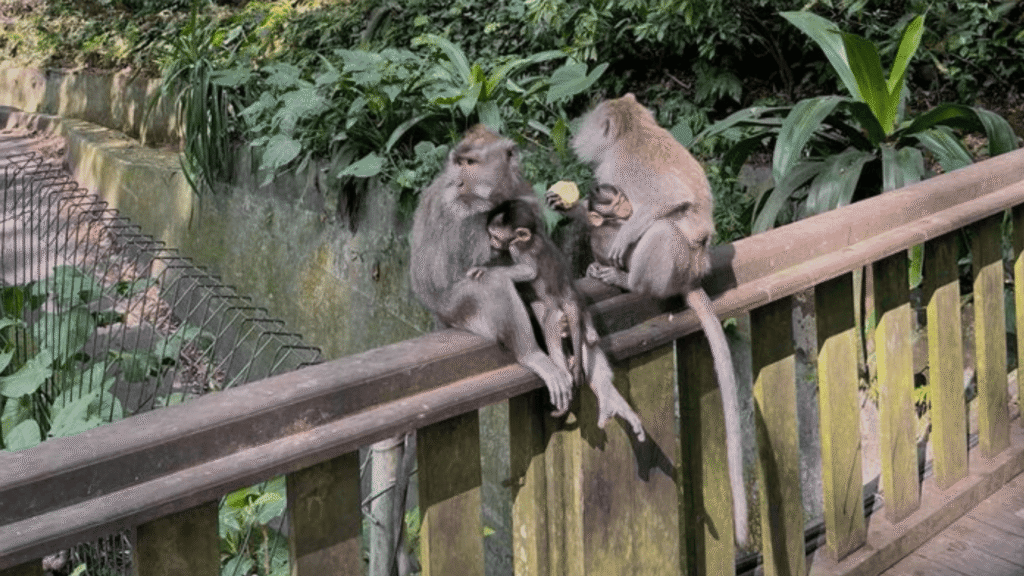
The monkeys are undeniably the main attraction—curious, intelligent, and highly social.
While encounters can be playful, it’s important to remember they are wild animals.
What to expect:
- Monkeys may approach you out of curiosity
- They are known to grab loose items like sunglasses or hats
- Feeding is regulated and should only be done by staff
Maintaining calm and awareness ensures a safe and enjoyable experience.

Cultural and Spiritual Context
The Sacred Monkey Forest is not a zoo—it is an active spiritual site.
Local communities continue to use the temples for ceremonies, and offerings are placed throughout the forest daily.
Visitors are encouraged to observe respectfully:
- Avoid entering temple areas unless permitted
- Do not disturb offerings
- Dress modestly when near sacred zones
Understanding this context transforms the visit from entertainment into cultural appreciation.


Why Stay in Sebatu, Ubud
After experiencing the lively energy of the Monkey Forest, many travelers seek a quieter retreat.
Sebatu, located north of central Ubud, offers that contrast—lush landscapes, fewer crowds, and a deeper connection to traditional Balinese life.
Puri Gangga Resort in Sebatu, Ubud provides an ideal setting to unwind after a day of exploration, where the sounds of nature replace the bustle of the town center.
Practical Travel Tips
- Opening Hours: Typically 9:00 AM – 6:00 PM
- Best Time to Visit: Early morning for fewer crowds and active monkeys
- Entrance Fee: Moderate, supporting conservation efforts
- What to Avoid: Loose items, food, and direct eye contact with monkeys
- Nearby Spots: Combine with Ubud Art Market or Campuhan Ridge Walk
Experience Puri Gangga Resort
For those inspired by nature and cultural discovery, the journey continues beyond the forest.
At Puri Gangga Resort in Sebatu, Ubud, the connection to Bali’s landscape becomes more personal and grounded. Experiences such as Sebatu Village Life offer insight into how local communities live in harmony with nature—echoing the same philosophy found in the Monkey Forest.
Moments of restoration unfold at Dewi Gangga Spa, where traditional healing practices bring balance after a day of exploration. Dining at Kailasha Restaurant celebrates local ingredients with thoughtful simplicity, while Gangga Coffee reflects the richness of Bali’s agricultural heritage.
Through the Gangga Experience, guests can explore temples, nature trails, and cultural encounters that deepen their understanding of Ubud’s unique ecosystem.
This is where exploration meets stillness—where every experience feels connected.
For reservations and inquiries:
Email: reservation@puriganggaresort.com
Booking: https://puriganggaresort.com/book
Experiences: https://booking.puriganggaresort.com
Frequently Asked Questions
Is Sacred Monkey Forest Sanctuary safe to visit?
Yes, as long as visitors follow guidelines and respect the monkeys’ behavior.
Can monkeys be aggressive?
They can be mischievous, but aggression is rare if you avoid provoking them.
What should I not bring to the Monkey Forest?
Avoid bringing food, loose accessories, and valuables that can be easily taken.
How long should I spend at the Monkey Forest?
Most visitors spend 1–2 hours exploring the forest.
Is it suitable for children?
Yes, but children should be supervised closely due to the presence of wild animals.
Discover More Stories