Galungan in Bali: The Sacred Celebration of Dharma Over Adharma
Bali is renowned for its rich cultural heritage, vibrant traditions, and deep spiritual roots. Across the island, religious ceremonies continue to shape daily life, preserving values that have been passed down through generations.
Among the most important celebrations in Balinese Hinduism is Galungan, a sacred festival that commemorates the victory of Dharma over Adharma. More than a religious holiday, Galungan is a profound expression of faith, gratitude, and spiritual reflection that brings families and communities together throughout Bali.
Celebrated every 210 days according to the Balinese Pawukon calendar, Galungan transforms the island into a breathtaking display of devotion. Roads become lined with beautifully decorated Penjor, temples fill with offerings and prayers, and families gather to honor their ancestors while celebrating the triumph of righteousness over negative forces.

What is Galungan?
Galungan is one of the most significant holy days in the Balinese Hindu calendar. The festival celebrates the victory of Dharma, representing truth, virtue, harmony, and righteousness, over Adharma, which symbolizes negativity, chaos, and forces that disrupt balance.
For Balinese Hindus, Galungan serves as a reminder that the struggle between positive and negative forces exists not only in the world around us but also within ourselves. The celebration encourages individuals to strengthen their faith, cultivate virtue, and maintain harmony in daily life.
Galungan is also believed to be the time when ancestral spirits descend from the spiritual realm to visit their families on earth. Through prayers, offerings, and ceremonies, Balinese families welcome their ancestors with gratitude and devotion.

The Meaning of Dharma Over Adharma
At the heart of Galungan lies the timeless philosophy of Dharma over Adharma.
Dharma represents truth, wisdom, moral responsibility, and the values that guide individuals toward a meaningful and balanced life. Adharma represents ignorance, greed, negativity, and actions that create disharmony.
The celebration of Galungan symbolizes the triumph of positive values over negative influences. It reminds people to cultivate compassion, honesty, gratitude, and spiritual awareness while overcoming selfishness, anger, and destructive behavior.
For Balinese Hindus, this victory is not merely symbolic. It is a personal journey of self-improvement and spiritual growth that continues throughout life.

Preparations Before Galungan
Preparations for Galungan begin several days before the celebration.
Families clean their homes and family temples, prepare ceremonial offerings, and decorate sacred spaces. Communities work together to organize temple ceremonies and cultural activities, reflecting the Balinese spirit of cooperation and togetherness.
The preparation process itself is considered an act of devotion. Every offering and ritual arrangement is made with sincerity, gratitude, and respect.
The Iconic Penjor
One of the most recognizable symbols of Galungan is the Penjor.
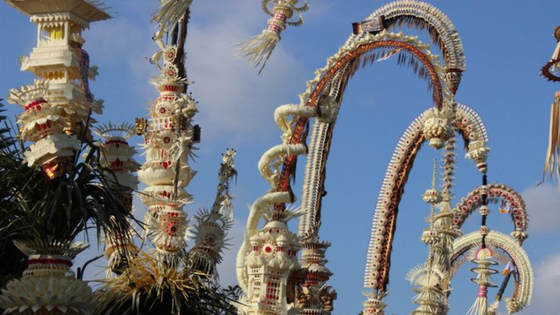
A Penjor is a tall bamboo pole decorated with young coconut leaves, flowers, fruits, rice, and traditional ornaments. Installed in front of homes, temples, businesses, and public buildings, Penjor creates a spectacular visual landscape throughout Bali during the Galungan season.
The Penjor symbolizes prosperity, gratitude, and devotion to Ida Sang Hyang Widhi Wasa, the Supreme God in Balinese Hindu belief.
Its elegant curved shape is believed to represent Mount Agung, Bali’s most sacred mountain, while the agricultural products attached to it symbolize abundance and blessings from nature.
Galungan Day Ceremonies
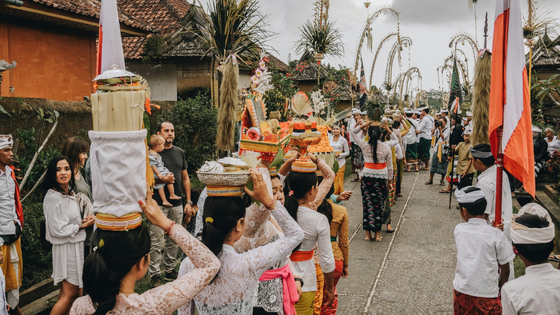
On Galungan Day, Balinese Hindus dress in traditional ceremonial attire and gather with their families for prayer.
Ceremonies take place at household shrines, family temples, and community temples throughout the island. Offerings of flowers, fruits, rice cakes, and incense are presented as expressions of gratitude and devotion.
Prayers are offered for blessings, protection, prosperity, and harmony. The atmosphere becomes deeply spiritual as temples fill with worshippers and villages come alive with sacred traditions.
Honoring Ancestors During Galungan
A unique aspect of Galungan is the belief that ancestral spirits return to visit their descendants.
Balinese families honor their ancestors through prayers and offerings, expressing gratitude for the guidance, wisdom, and blessings passed down through generations.
This tradition reflects the deep respect for family lineage that remains central to Balinese culture and strengthens the connection between the living and their ancestors.
Galungan and Kuningan
The Galungan celebration concludes ten days later with Kuningan.
While Galungan marks the arrival of ancestral spirits, Kuningan marks their return to the spiritual realm. Together, these celebrations form one of the most sacred periods in the Balinese calendar and highlight the importance of faith, gratitude, and spiritual balance.
Experiencing Galungan in Bali
For travelers, Galungan offers an extraordinary opportunity to experience the spiritual heart of Bali.
The island becomes filled with cultural beauty as Penjor line village roads, temples host colorful ceremonies, and families gather in celebration. Beyond its visual appeal, Galungan provides a deeper understanding of the beliefs and values that continue to shape Balinese society.
Visitors who experience Bali during Galungan often discover a side of the island that goes far beyond its beaches and landscapes—a living culture rooted in spirituality, gratitude, and community.
Frequently Asked Questions
What is Galungan in Bali?
Galungan is one of the most important Balinese Hindu festivals, celebrating the victory of Dharma over Adharma.
What does Dharma over Adharma mean?
It symbolizes the triumph of truth, virtue, and righteousness over negativity, chaos, and wrongdoing.
What is a Penjor?
A Penjor is a decorated bamboo pole installed during Galungan as a symbol of prosperity, gratitude, and devotion.
How often is Galungan celebrated?
Galungan is celebrated every 210 days according to the Balinese Pawukon calendar.
What is the relationship between Galungan and Kuningan?
Galungan marks the arrival of ancestral spirits, while Kuningan marks their return to the spiritual realm ten days later.
Experience Puri Gangga Resort
At Puri Gangga Resort in Sebatu, Ubud, guests are invited to experience Bali beyond its landscapes — through spirituality, culture, and meaningful connection.
Surrounded by peaceful rice fields and village life, the resort offers opportunities to discover authentic Balinese traditions through wellness experiences, cultural activities, and sacred ceremonies that remain part of everyday life.
Guests can enjoy restorative treatments at Dewi Gangga Spa, explore cultural journeys through Gangga Experience and Sebatu Village Life, or savor Indonesian and Balinese flavors at Kailasha Restaurant.
For travelers seeking tranquility, spirituality, and authentic cultural immersion, Puri Gangga Resort offers a refined experience rooted in the essence of Bali.
Contact: reservation@puriganggaresort.com
Booking: https://puriganggaresort.com/book
Experiences: https://booking.puriganggaresort.com
Discover More Stories