
Who Can Do Melukat in Bali? A Guide for Visitors and Wellness Seekers
Melukat is a sacred Balinese purification ritual that offers a meaningful moment of cleansing, reflection, and renewal. Rooted in Balinese Hindu tradition, this spiritual practice can also be experienced by people from different cultural and religious backgrounds when the ceremony is open to visitors.
Whether you are visiting Bali for the first time, exploring its cultural traditions, or seeking a meaningful wellness experience, Melukat provides an opportunity to slow down, reflect, and connect with Bali’s living traditions.
In this guide, discover who can participate in Melukat, what to expect, how to prepare, and how to experience this sacred tradition respectfully.
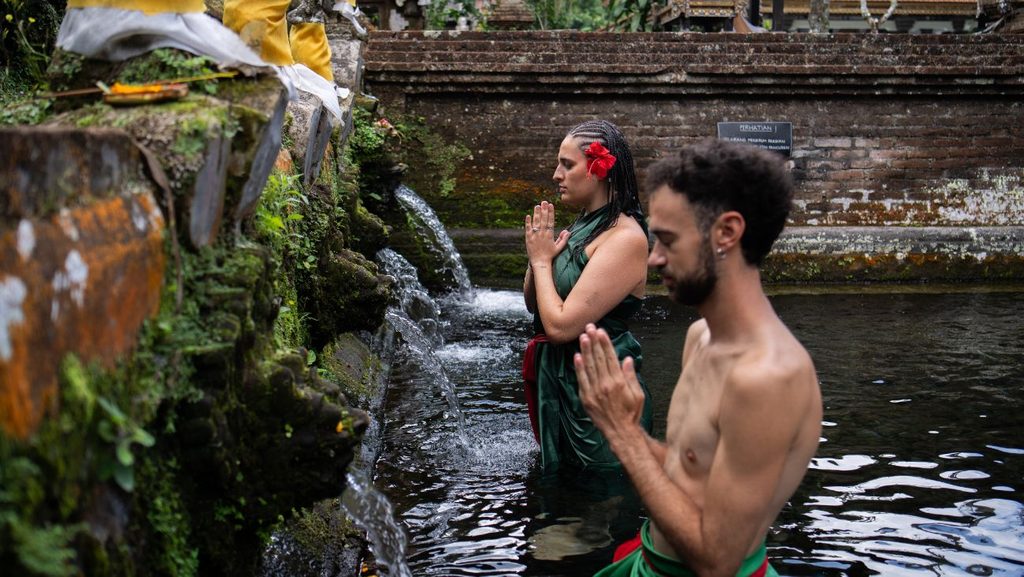
Want to understand the ritual in more detail?
Read our guide: Purification Ceremony at Sebatu Holy Water
Who Can Do Melukat in Bali?
Melukat is a sacred Balinese purification ritual traditionally practiced as part of Hindu spiritual life. Today, the practice is also experienced by visitors from different cultural and religious backgrounds who wish to take part respectfully in this meaningful Balinese tradition. The Bali provincial cultural authority notes that Malukat is practiced not only by Balinese communities but also by domestic and international visitors, including people from Hindu and non-Hindu backgrounds.
So, who can do Melukat in Bali?
In places where the ceremony is open to visitors, people from different backgrounds can participate in Melukat, provided they respect the sacred nature of the ritual, follow local customs, and listen to the guidance of the temple or local guide.
Melukat is not simply about entering holy water. It is an opportunity for purification, reflection, prayer, and connection with Balinese living culture.
For travelers looking for a meaningful cultural experience in Bali, Melukat can offer a deeper understanding of the island’s spiritual traditions.
Is Melukat Open to Everyone?
Melukat can be experienced by people from different cultural and religious backgrounds, but participation depends on the location, ceremony, and local customs.
At places where visitors are welcomed, there is generally no requirement for participants to be Balinese or to belong to a particular nationality. What matters most is respectful participation.
For wellness seekers, the experience can offer a meaningful moment of reflection, mindfulness, and personal renewal while remaining rooted in Balinese spiritual tradition.
Visitors should understand that Melukat remains a sacred practice. It should not be treated simply as a tourist attraction, photo opportunity, or wellness activity.
At Gunung Kawi Sebatu, purification is part of the living spiritual traditions of Sebatu Village. The temple’s sacred springs have long been associated with purification and prayer.
Can Foreigners Do Melukat in Bali?
Yes, foreigners can participate in Melukat when the ceremony or location is open to visitors.
International travelers increasingly seek authentic cultural and spiritual experiences in Bali, and Melukat provides an opportunity to respectfully experience one of the island’s living traditions.
However, being a visitor also means understanding that you are entering a sacred environment.
Before participating:
- Follow the local dress code.
- Listen to the guide or temple caretaker.
- Follow the sequence of the ritual.
- Keep your voice low.
- Ask before taking photographs.
- Give space to local worshippers.
- Avoid treating the ceremony as a performance.
The most important thing is to approach Melukat with sincerity, humility, and respect.
Do You Have to Be Hindu to Do Melukat?
No, Melukat is not necessarily limited to people who identify as Hindu.
The ritual has deep roots in Balinese Hindu culture, but people from other backgrounds may participate when the ceremony is open to them and local customs are followed. The Bali provincial cultural authority specifically notes participation by both Hindu and non-Hindu visitors.
For visitors, participating in Melukat does not mean converting to Hinduism.
Instead, it can be an opportunity to respectfully experience Balinese spirituality and culture while maintaining your own personal beliefs.
Participants may use the moment for personal reflection, prayer, gratitude, or setting a peaceful intention according to their own beliefs.
What Does Melukat Mean?
Melukat is a traditional Balinese purification practice involving holy water, prayer, offerings, and intention.
Water has an important spiritual meaning in Balinese Hindu traditions. The provincial cultural authority explains that water is understood as a source of life and purification, with Malukat associated with cleansing and restoring positive energy.
The ritual may be performed for different reasons, including spiritual purification, important life moments, religious ceremonies, or personal reflection.
For visitors, understanding this meaning is important because it changes the way the experience should be approached.
Melukat is not simply “bathing in holy water.”
It is a sacred ritual with cultural and spiritual significance.
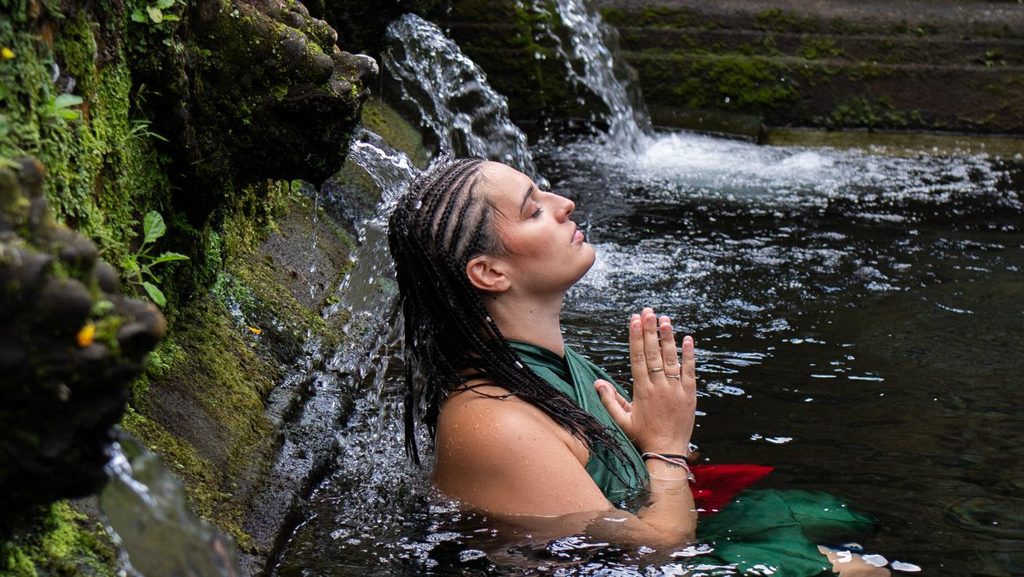
Curious about the spiritual meaning behind Bali’s sacred water traditions?
Explore: 10 Holy Springs in Bali for Spiritual Cleansing
What Happens During a Melukat Experience?
The exact process can vary depending on the location and ceremony, so participants should always follow local guidance.
A typical purification experience may include:
1. Preparing for the Ritual
Participants change into appropriate traditional temple attire, usually including a sarong and sash.
An offering may also be prepared as part of the ceremony.
2. Setting an Intention
Before entering the holy water, participants may take a moment to pray, reflect, or set a personal intention.
At Pura Gunung Kawi Sebatu, the purification experience includes preparation, prayer, holy water, and guidance through the ritual process.
3. Entering the Holy Water
Participants enter the purification area and follow the sequence provided by the guide or temple caretaker.
The water is used symbolically as part of the purification process.
4. Prayer and Purification
Participants follow the appropriate prayers and purification steps according to local tradition.
The focus is on cleansing, reflection, gratitude, and renewal.
5. Final Blessing
Depending on the ceremony, participants may receive a blessing such as bija, or blessed rice, at the conclusion of the ritual.
At Gunung Kawi Sebatu, a final bija blessing may form part of the guided purification experience.
6. Quiet Reflection
After completing the ritual, take a few quiet moments to reflect on the experience before leaving the sacred area.
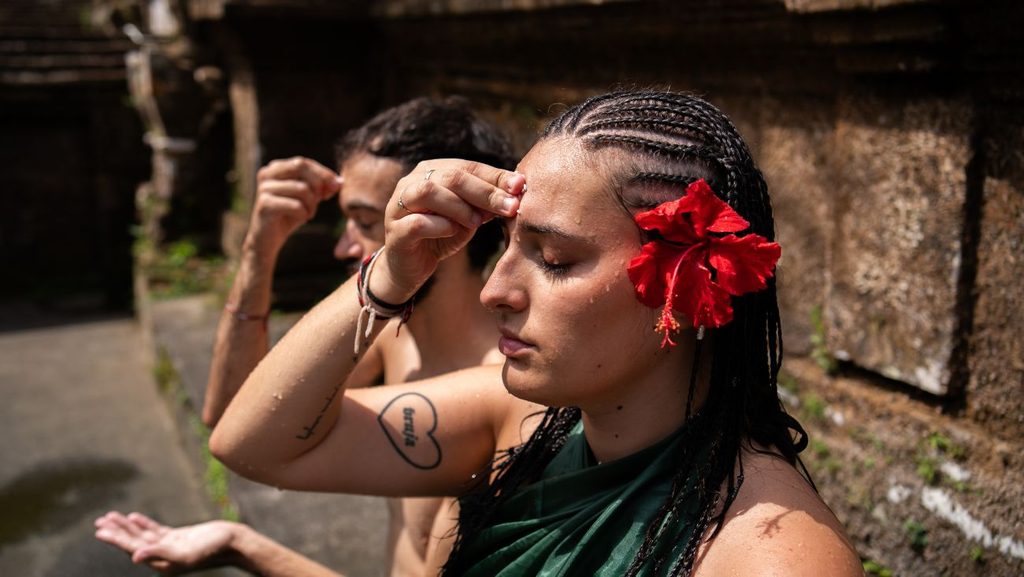
What Should You Wear for Melukat?
Respectful clothing is essential when visiting a Balinese temple.
Visitors should generally wear:
- A sarong
- A sash
- Modest clothing
- Clothing that covers the shoulders and knees
Temple attire may be available to borrow or rent depending on the location.
It is also practical to bring:
- A change of clothes
- A towel
- Waterproof sandals
- Personal toiletries
You will get wet during the purification process, so preparing a change of clothes is highly recommended.
Melukat Etiquette: What Visitors Should Know
Respect is the most important part of Melukat.
- Dress appropriately
Wear traditional temple attire and follow the dress requirements of the location.
- Follow local guidance
Do not assume that every temple follows exactly the same procedure. Listen to your local guide, temple caretaker, or priest.
- Keep the atmosphere peaceful
Avoid loud conversations, unnecessary movement, or disruptive behavior.
- Ask before taking photographs
Some areas of a temple or ceremony may have photography restrictions. Always ask before taking photos, especially of people praying.
- Do not treat Melukat as entertainment
The ritual is a living spiritual practice. Avoid turning the ceremony into a photo session or social media performance.
- Respect local worshippers
You may share the sacred space with people who visit the temple as part of their everyday religious practice. Give them appropriate space and privacy.
- Follow temple restrictions
Certain restrictions may apply depending on the temple and ceremony. Always check the local rules before participating.
Why Experience Melukat at Gunung Kawi Sebatu?
For travelers staying around Ubud, Gunung Kawi Sebatu offers a peaceful setting to experience Balinese purification traditions.
Located in Sebatu Village, the temple is surrounded by tropical greenery, sacred water, gardens, and traditional Balinese architecture. The site includes a designated purification area with holy water fountains used for Melukat.
Unlike simply visiting a temple for sightseeing, participating in Melukat allows visitors to experience a deeper aspect of Balinese living culture.
The peaceful environment of Sebatu also makes the experience particularly suitable for travelers seeking spiritual reflection, cultural connection, and a quieter side of Bali.
Discover more:
Melukat at Gunung Kawi Sebatu
Melukat Near Ubud
If you are staying in Ubud and looking for a meaningful spiritual activity, there are several places where visitors can learn about or experience Balinese purification traditions.
Among them, Gunung Kawi Sebatu is located in Sebatu Village, north of Ubud, and is known for its sacred springs and tranquil temple surroundings.
Other well-known purification sites in the wider Ubud area include Tirta Empul, where visitors can participate in a holy-water purification ritual under the guidance of local customs. Indonesia Travel notes that both local and international visitors participate in Melukat at Tirta Empul.
How to Prepare for Your First Melukat
If this is your first time experiencing Melukat, preparation can make the experience more meaningful.
Before the ritual
Learn about the meaning of Melukat and the location you are visiting.
Dress appropriately
Prepare modest clothing and temple attire.
Bring a change of clothes
The purification process involves holy water, so you will become wet.
Keep an open mind
You do not need to change your personal beliefs. Instead, approach the experience with respect and curiosity.
Follow local guidance
The ritual may differ between locations, so let the local guide or temple caretaker explain what to do.
Leave time for reflection
Do not rush away immediately after the ceremony. Give yourself a few moments to appreciate the experience.
Melukat as a Cultural Experience
For many travelers, Melukat becomes more than an activity during a Bali holiday.
It provides a chance to experience living Balinese culture—not through a performance, but through participation in a tradition that continues to hold meaning within local communities.
The experience can also open the door to learning about other aspects of Balinese life, including temple traditions, offerings, village customs, agriculture, local craftsmanship, and the relationship between people, nature, and spirituality.
This is particularly meaningful in Sebatu Village, where traditional practices remain closely connected to everyday community life.
Frequently Asked Questions
Can anyone do Melukat in Bali?
Melukat can be experienced by people from different cultural and religious backgrounds when the ceremony is open to visitors. Participants should respect the sacred nature of the ritual and follow local customs.
Can foreigners do Melukat in Bali?
Yes. Foreign visitors can participate in Melukat at locations that welcome visitors, provided they follow the appropriate dress code, etiquette, and local guidance.
Do you have to be Hindu to participate in Melukat?
No. People from different religious backgrounds may participate when the ceremony is open to them. Melukat has deep roots in Balinese Hindu tradition, so visitors should approach the experience respectfully.
Is Melukat a religious ceremony?
Yes. Melukat is rooted in Balinese Hindu spiritual tradition and should be treated as a sacred ritual rather than simply a tourist activity.
What should I wear for Melukat?
Visitors should wear appropriate temple attire, including a sarong and sash, with modest clothing. Bring a change of clothes and a towel because the purification process involves holy water.
Can I take photos during Melukat?
Photography rules vary by location. Always ask permission before photographing the ritual, priests, or people praying, and avoid disrupting the ceremony.
Where can I experience Melukat near Ubud?
Gunung Kawi Sebatu in Sebatu Village is one option for experiencing a peaceful Balinese purification tradition near Ubud. Tirta Empul is another well-known purification site in the wider area.
Is Melukat only for spiritual reasons?
Melukat is a spiritual purification ritual rooted in Balinese Hindu tradition. Visitors may approach the experience with personal intentions such as reflection, gratitude, or renewal, while respecting its religious and cultural significance.
Experience Melukat at Gunung Kawi Sebatu with Puri Gangga Resort
For travelers who want to experience Melukat while discovering the cultural heart of Sebatu, Puri Gangga Resort offers a convenient base near Gunung Kawi Sebatu.
Guests can arrange a purification experience at the sacred water site and continue their cultural journey through Sebatu Village Life, discovering local traditions, village experiences, and the living culture surrounding the resort.
After the ritual, guests can continue their wellness journey at Dewi Gangga Spa, enjoy Balinese-inspired dining at Kailasha Restaurant, or explore other cultural and nature experiences around Sebatu.
Melukat can be a meaningful part of a Bali journey—not because it is simply something to add to an itinerary, but because it offers an opportunity to slow down, reflect, and experience a living tradition with respect.
Discover Melukat, explore Sebatu, and experience Bali beyond the ordinary.
Contact: reservation@puriganggaresort.com
Booking: https://puriganggaresort.com/book
Experiences: https://booking.puriganggaresort.com